

Turning survival into growth: a roadmap for regional UK transport operators
Across the UK, particularly outside major metropolitan hubs, bus and local transport operators face a stark reality. Since the pandemic, they have been caught between two tightening forces: rising operating costs and a ridership base that has yet to fully return. Many now operate in what can only be described as “survival mode” — cutting services, battling staff shortages, and stretching thin margins in an effort to keep wheels turning.
The real question is whether survival is enough. For communities, for local authorities, and for the operators themselves, the answer must be no. Covering costs can keep services alive in the short term, but the long-term health of the industry depends on moving beyond survival and into growth. That means attracting new passengers, rebuilding loyalty with existing ones, and winning the trust of councils and governments that hold the purse strings.
The road from survival to growth is not simple, but it is navigable. It requires operators to embrace flexible fare strategies, rethink loyalty, simplify payments, and build a stronger foundation of data-driven evidence to underpin both their operations and their tenders.
The landscape after COVID
The pandemic did not invent the pressures on regional bus networks, but it did accelerate them. Ridership across England outside London remains well below pre-COVID levels, hovering around 72 percent for concessionary travel as of March 2024. Overall passenger journeys are down around nine percent compared to 2019, according to the National Audit Office.
Meanwhile, costs have surged. Inflation has driven up wages, fuel, insurance, and maintenance. At the same time, government reimbursements and grants have been declining in real terms. Even with interventions like the £2 fare cap, operators find themselves operating on razor-thin margins.
Structural challenges compound the financial pressures. Many operators are bound by contracts that lock them into inflexible route patterns or fare structures. They must also comply with increasingly strict transparency rules, such as mandatory participation in the Bus Open-Data Service, while proving performance improvements to secure funding. In short, the rules of the game are changing, and operators who cannot adapt risk being left behind.
Why growth must replace survival
Survival mode leads to a downward spiral. Reduced services make buses less attractive, pushing more riders back into cars. Lower ridership reduces farebox revenue, which in turn forces further service cuts. Communities lose mobility, operators lose resilience, and trust in the public transport system erodes.
Growth, by contrast, has a compounding effect. Attracting even a modest increase in riders can generate new revenue, justify service improvements, and strengthen the case for investment from local authorities. Growth also restores public trust. When passengers see their local transport not just surviving but innovating, they are more likely to support it with their patronage — and their taxes.
The challenge, then, is how to catalyse that growth in a way that is financially sustainable, socially inclusive, and operationally realistic for operators of all sizes.
Rethinking fares for modern travel patterns
One of the clearest opportunities lies in fare reform. Traditional fixed fares and rigid ticketing models no longer reflect modern travel habits. Passengers today — especially in smaller towns and rural areas — are more likely to be occasional riders than daily commuters. For them, the fear of “overpaying” for a service they don’t use every day becomes a barrier.
Flexible fare structures, including daily and weekly caps, provide a solution. They reassure riders that they will never pay more than the best available price, regardless of how often they travel. Research into transport pricing shows that caps not only encourage initial uptake but can also stimulate additional journeys once passengers know they’ve hit their limit. For operators, that means smoother demand distribution and better asset utilisation.
Building loyalty through incentives
The transport sector has been slow to adopt practices that other industries take for granted. Retailers and airlines have long used loyalty programmes to drive repeat business, yet buses and local transit rarely offer similar schemes.
Digital loyalty tools can be transformative. Rewarding frequent trips, encouraging off-peak travel, or even partnering with local businesses to provide discounts gives passengers a tangible reason to choose the bus over other options. A study on loyalty in transport found clear links between incentives and both efficiency and profitability. More importantly, loyalty programmes create a psychological shift: passengers begin to view themselves not just as occasional riders, but as valued members of a community service.
Removing friction from payments
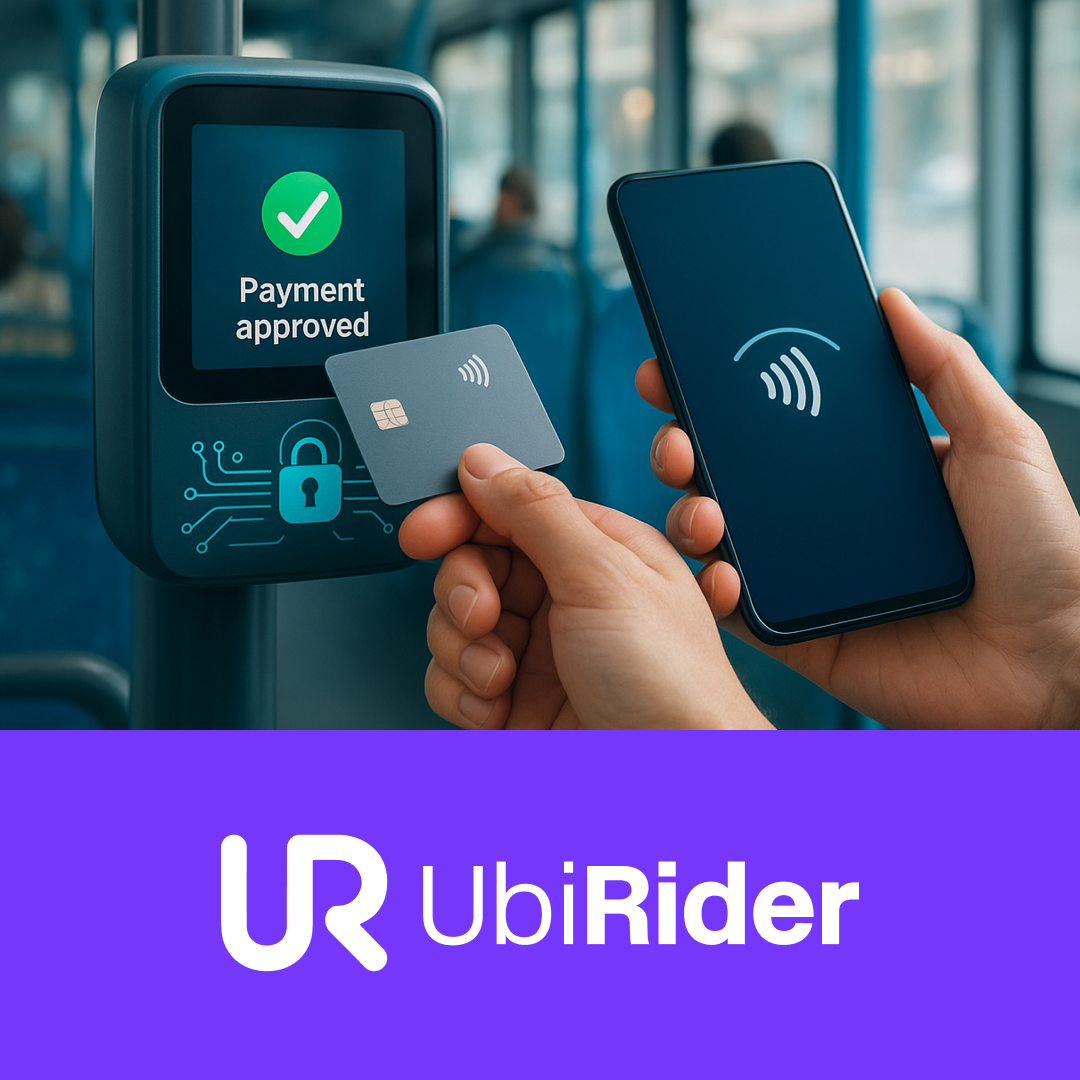
Payment is another friction point that can dissuade riders. Long boarding times, confusing ticket categories, or a lack of modern payment options all undermine the passenger experience. In some rural areas, cash remains dominant, while in cities, riders expect contactless and mobile integration as standard.
The way forward is not to eliminate cash overnight — that risks excluding vulnerable populations — but to build hybrid systems where multiple payment methods coexist seamlessly.
The goal is to let passengers pay in the way that suits them best, whether that’s cash, contactless, mobile wallets, or QR codes. Studies on smart ticketing consistently show that reducing friction in fare collection not only speeds up boarding but increases overall ridership.
Data as a foundation for trust
Operators today are under pressure not only to deliver services but also to demonstrate their value with evidence. Local authorities and funding bodies increasingly demand hard data: ridership figures, farebox recovery, punctuality rates, and even emissions savings.
For operators, this is both a challenge and an opportunity. Moving from anecdote to evidence requires investment in data collection and analysis, but it also strengthens their position in tendering processes. An operator who can show clear, real-time evidence of efficiency and rider growth stands apart from one who simply promises it.
The experience of Transport for London demonstrates how data transparency can build public confidence. Open data on schedules, delays, and ridership has empowered developers, improved services, and fostered trust between operator and passenger. Regional operators can apply the same principle, albeit on a smaller scale, by leveraging digital tools to track and communicate performance.
A phased approach to growth
Shifting from survival to growth will not happen overnight. Operators need a phased approach that balances experimentation with accountability.
It begins with pilots: testing flexible fares, loyalty schemes, or hybrid payments on a small number of routes. Once initial results are in, operators can refine based on data, adjusting thresholds or incentives before scaling system-wide. Over time, these changes accumulate into a performance record that not only boosts ridership but strengthens future tenders.
Crucially, operators must communicate these steps to stakeholders. Growth is not just about what happens on the road; it’s about building confidence with passengers, local councils, and government partners that the service is evolving in the right direction.
Timing is everything
The window for operators to make this shift is narrow. Government support for local transport is not guaranteed indefinitely, and competition for limited funding is fierce. Operators who can show that they are not only surviving but also growing will be far better positioned to secure long-term contracts and community backing.
Moreover, the habits formed in the post-COVID era are still malleable. As commuting patterns settle into new norms, there is an opportunity to win back riders who might otherwise default to private cars. Waiting too long risks locking in those patterns permanently.
From breaking even to building trust
The real transformation for regional UK operators will come when they stop seeing themselves as merely covering costs and start seeing themselves as active agents of growth — growth in ridership, in revenue, and in trust.
That requires courage to experiment with fares, creativity to reward loyalty, pragmatism in offering flexible payments, and discipline in capturing and communicating data. None of these are easy shifts, but together they create a model that is more resilient, more appealing to passengers, and more credible to funders.
The choice facing many operators today is stark: continue to shrink services until survival becomes impossible, or embrace growth as the only sustainable path forward. The future of regional mobility — and the communities that depend on it — rests on making the right choice.










.png)
.png)


.png)


.png)