
Myth vs. Truth: The Hidden Cost of Legacy Fare Systems
For many transit agencies, legacy fare systems feel like a safe financial choice. The logic is familiar: once the system is installed and paid for, the biggest expense is behind you. The infrastructure is in place. The contracts are signed. The risk feels contained.
But that belief doesn’t hold up over time.
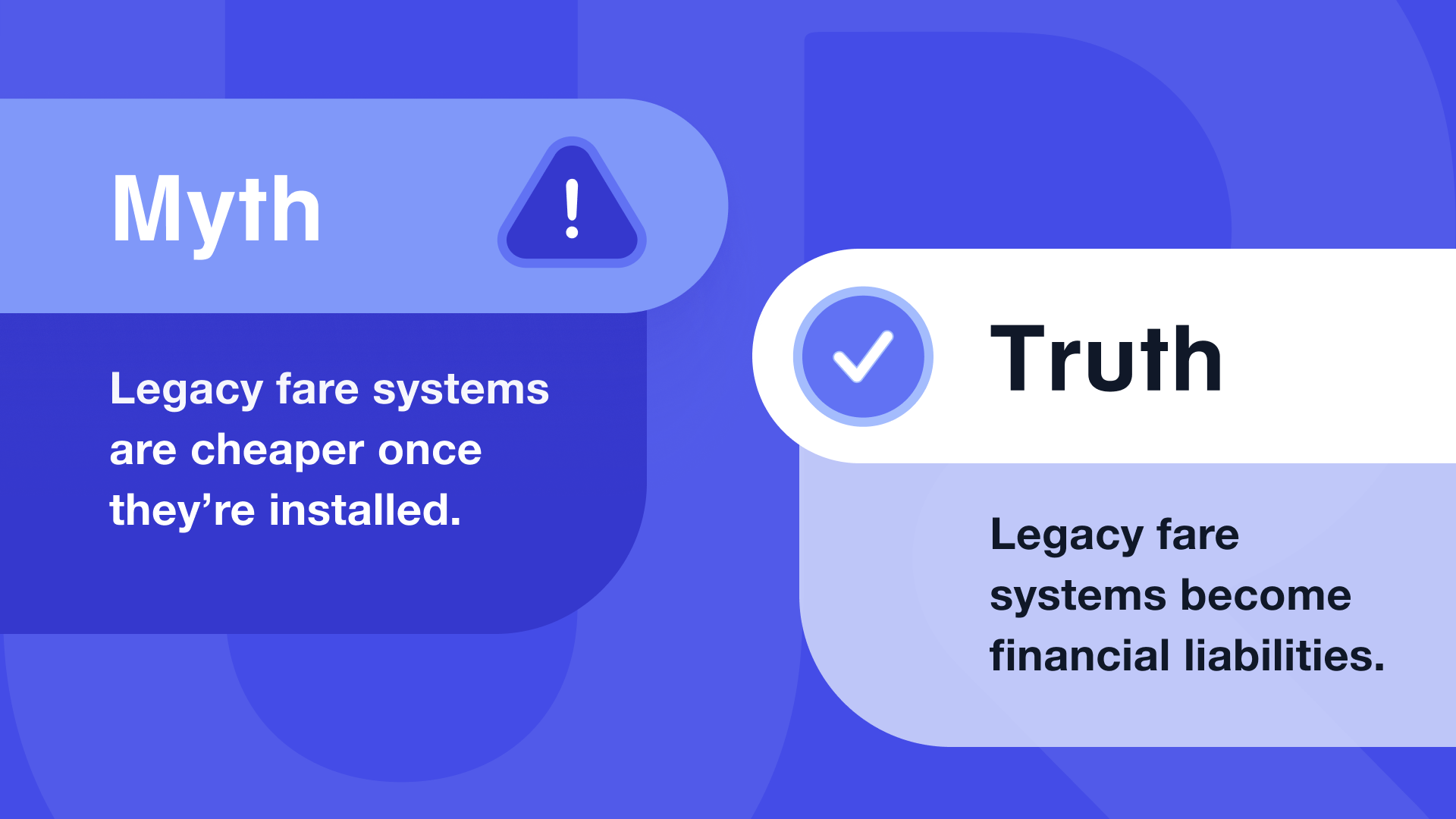
Myth: Legacy fare systems are cheaper once they’re installed.
Truth: They become financial liabilities.
What looks stable on day one often turns into a growing burden year after year.
When infrastructure turns into technology debt
Legacy fare systems are built around hardware—validators, vending machines, gates, servers—each with a fixed lifespan and limited flexibility. From the moment they go live, these systems begin accumulating what many finance and IT leaders now recognize as technology debt.
That debt shows up in several ways:
- Aging components that are costly to repair
- Proprietary software that limits integration
- Vendor lock-in that restricts future options
- Inflexibility when fare policies or rider behavior change
Even when a system is technically “paid off,” the costs don’t disappear. They simply shift from capital expenditure to ongoing operational strain.
The 7–10 year reset problem
Most hardware-heavy fare systems require major upgrades every 7 to 10 years. These are not minor refreshes. They often involve replacing large portions of the system—new equipment, new software versions, new installation work, and new training.
For agencies, this creates a repeating cycle:
- Make a large capital investment
- Stretch the system as long as possible
- Face a sudden reinvestment cliff
- Repeat
These reinvestment cycles are difficult to plan around and even harder to justify when ridership patterns, payment preferences, and funding environments are constantly shifting.
From a CFO’s perspective, this is not stability. It’s deferred risk.
The opportunity cost no one sees
There’s another cost that rarely shows up on balance sheets: opportunity cost.
Money tied up in legacy fare infrastructure is money that can’t be used to improve service, introduce fare capping, expand contactless payments, or gain real-time operational insight. Agencies end up spending millions just to stand still—maintaining systems that were designed for a different era of transit.
Meanwhile, rider expectations continue to evolve, shaped by everyday digital experiences outside public transport.
A different financial path forward
SaaS-based, account-based fare platforms follow a fundamentally different model. Instead of periodic reinvestment shocks, agencies benefit from continuous improvement. Updates happen incrementally. New capabilities are introduced without replacing hardware. Systems stay current without starting over.
The financial advantages are clear:
- Predictable operating costs
- No forced upgrade cycles
- Reduced dependency on physical infrastructure
- Greater flexibility as policies and technologies change
This isn’t about chasing the latest trend. It’s about avoiding long-term liabilities that quietly drain budgets and limit options.
Rethinking “Cheaper”
A system is not cheap just because it’s familiar—or because the invoice was paid years ago. True affordability is measured over time, across multiple budget cycles, leadership changes, and policy shifts.
Legacy fare systems don’t simply age. They accumulate risk. And the longer agencies wait to address that reality, the harder and more expensive the transition becomes.
Fiscal responsibility today means choosing systems that evolve with transit—not ones that force agencies to keep paying for yesterday’s decisions.











.png)
.png)


.png)


.png)